


Project Hail Mary, Last Chances, and the Human Need for Hope

The phrase “Hail Mary” has travelled a long way. For some, it first brings to mind the prayer. For others, it means a desperate final attempt — the long-shot effort made when the clock is almost out and there are no easy options left. In American football, a “Hail Mary” is exactly that: a high-risk, low-probability pass thrown in hope rather than certainty. That meaning has now become common far beyond sport.

That is part of why Project Hail Mary is such a striking title. The 2026 film adaptation of Andy Weir’s novel was released on March 20, 2026, and the title deliberately signals a mission built around one near-impossible chance to save the world.
It is a clever title, but it also touches something deeply human.
Most of us know what it is to live through a “Hail Mary” season. A relationship is fraying. A diagnosis arrives. Money runs thin. A door closes. A plan we trusted stops working. We do what we can, we think hard, we try to stay composed — and then, quietly, we realise that effort alone may not be enough. We are down to one last throw, one last plea, one last act of hope.
That kind of moment strips away a lot of illusion.
When life is smooth, it is easy to feel that we are held up by our own competence. We plan, organise, improve, optimise, and reassure ourselves that with enough care we can keep things under control. But when a true last-resort moment comes, something changes. We see how little of life we ever really controlled in the first place.
And yet those moments are not always empty. Sometimes they are the moments in which we become most honest.
A “Hail Mary” moment is, by definition, a moment in which success cannot be engineered in the usual way. It asks something different of us. Not passivity. Not denial. But humility.
Courage. Endurance. The willingness to keep going when certainty has gone.
That is one reason the phrase has lasted.
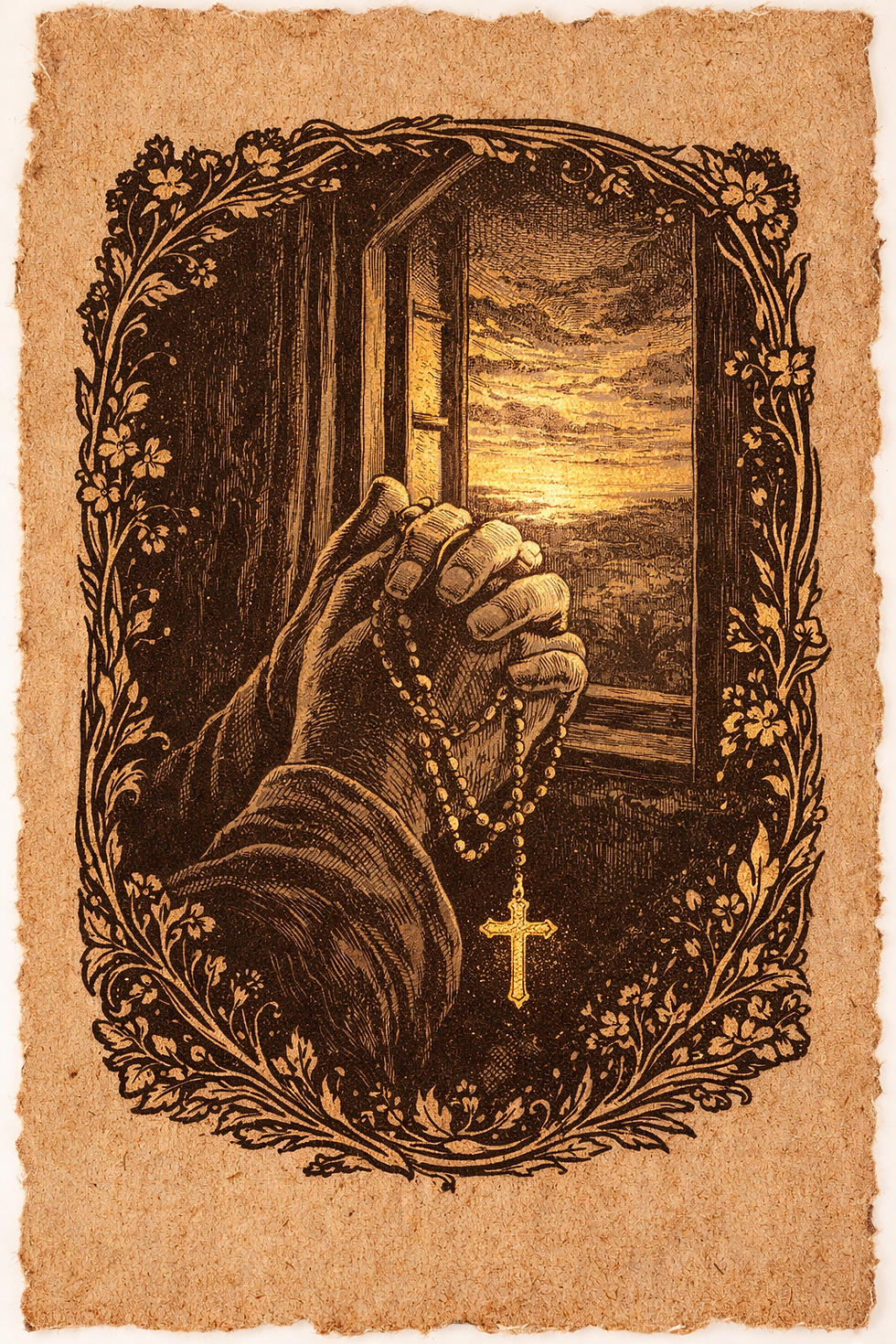
Even in secular speech, people reach for “Hail Mary” when they need language for a final attempt that feels almost beyond them. The expression still carries an echo of prayer, whether the speaker intends that or not. Beneath the idiom is an old human instinct: when the situation is too large for us, we reach beyond ourselves.
That instinct matters.
We often think hope is strongest when things look promising. But perhaps hope is actually clearest when things look fragile. When the outcome is unclear, hope reveals its true character. It is no longer confidence in a plan. It becomes the decision not to surrender to despair.
There is something spiritually recognisable in that.
For Christians, the Hail Mary is not a superstition or a magic formula. It is a prayer of attention, petition, and trust. It reminds us that when we are frightened, limited, and nearing the end of our own resources, we are still not abandoned. We may not be guaranteed the outcome we want. But we are not left alone in the asking.
That distinction is important.
Many of us want last-resort prayer to function like an emergency lever: pull it, and the situation changes. Sometimes life does turn in surprising ways. Sometimes help does arrive. Sometimes the pass lands, so to speak. But the deeper gift of prayer is not always control over events. Often it is steadiness within them. A return to perspective. A refusal to let fear have the final word.
So perhaps the real question is not whether we ever face “Hail Mary” moments. We will.
The question is what those moments reveal about us.
What do we trust when our usual strategies fail? What do we cling to when outcomes are uncertain?What kind of people do we become when we cannot guarantee success?
Popular culture gives us dramatic versions of these moments because they are compelling on screen. A mission with one chance. A final attempt. A last hope. But outside the cinema, the same pattern appears in quieter forms every day: in hospital waiting rooms, in strained marriages, in financial stress, in grief, in unanswered questions, in long ordinary seasons where someone simply keeps going without visible resolution.

These are not glamorous stories. But they are real ones.
And maybe that is why the idea resonates so widely. We all recognise the feeling of living at the edge of our own strength. We all know, at some point, what it is to make an effort that might not succeed. To pray when we do not know what will happen. To move forward without certainty.
A “Hail Mary” attempt, then, is not only about desperation. It can also be about dignity.
It can be the refusal to quit on love.The refusal to stop telling the truth.The refusal to let fear hollow out the soul.The refusal to believe that because something is unlikely, it is meaningless.
There is a particular kind of beauty in that.
Not the polished beauty of easy victories, but the harder beauty of hope under pressure.
So if Project Hail Mary has caught people’s attention, perhaps it is because the title names something familiar. Not merely a cinematic premise, but a human condition. We all eventually come to the place where our own resources feel small. We all meet moments that cannot be solved neatly. We all learn what it is to live, for a time, on hope.
And maybe that is not weakness.
Maybe it is one of the most truthful places a person can stand.
Because sometimes the final throw is not really about mastering the situation at all.
Sometimes it is about entrusting ourselves, with honesty and courage, to something greater than our own power.
And in a world that prizes control, that kind of hope can feel almost radical.
Gentle closing reflection
If you are in a “Hail Mary” season at the moment — a season of uncertainty, last chances, thin strength, or unanswered prayer — perhaps this is your reminder that hope is not foolish just because it is costly. Sometimes the bravest thing we do is continue, pray, ask, trust, and place one more small act of faith into God’s hands.
Not because the odds look good.
But because despair does not deserve the final word.


Comments